Contents
Kimchi Fried Rice
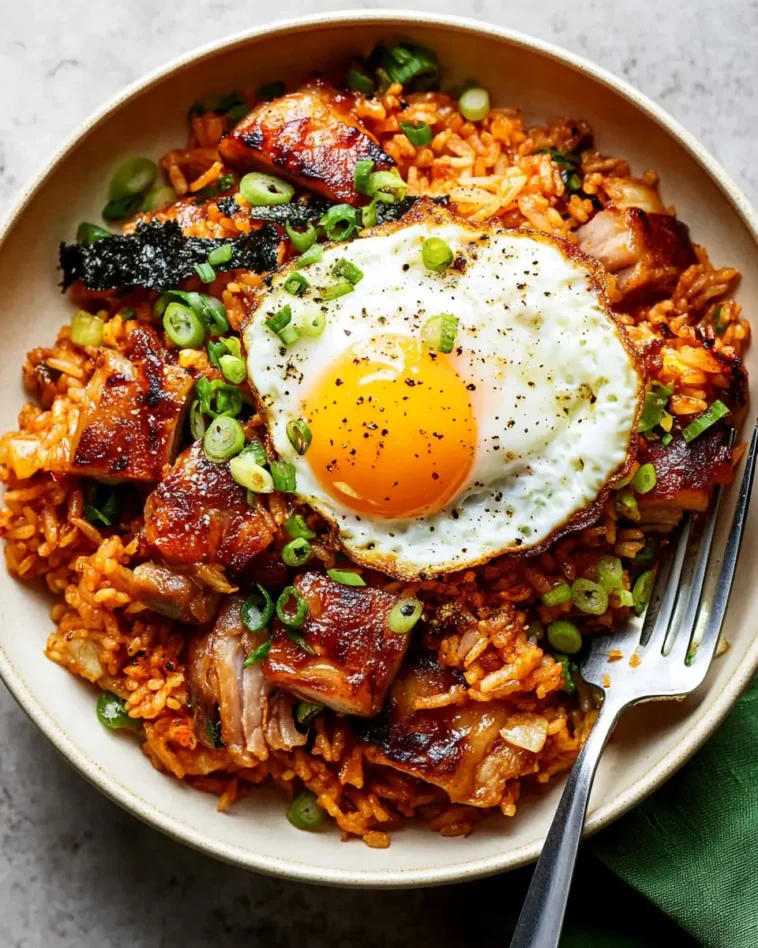
This is what happens to the rice nobody finished on Sunday. I used to just reheat leftover rice plain, which is honestly kind of sad, until I started frying it with kimchi instead. Now I sometimes cook extra rice on purpose just so I have an excuse to make this a couple days later.
Quick answer: fry chopped kimchi until it caramelizes, add day-old rice and gochujang, cook until crisp in spots, then top with a fried egg and nori. Twenty-five minutes, one pan.
Why day-old rice actually matters here
Fresh rice is too wet for this. The extra moisture in freshly cooked rice turns the whole pan into a sticky clump the second you add sauce. Rice that’s spent a night in the fridge has dried out just enough that the grains stay separate and pick up a little crispness at the edges instead of steaming into mush.
Ingredient notes
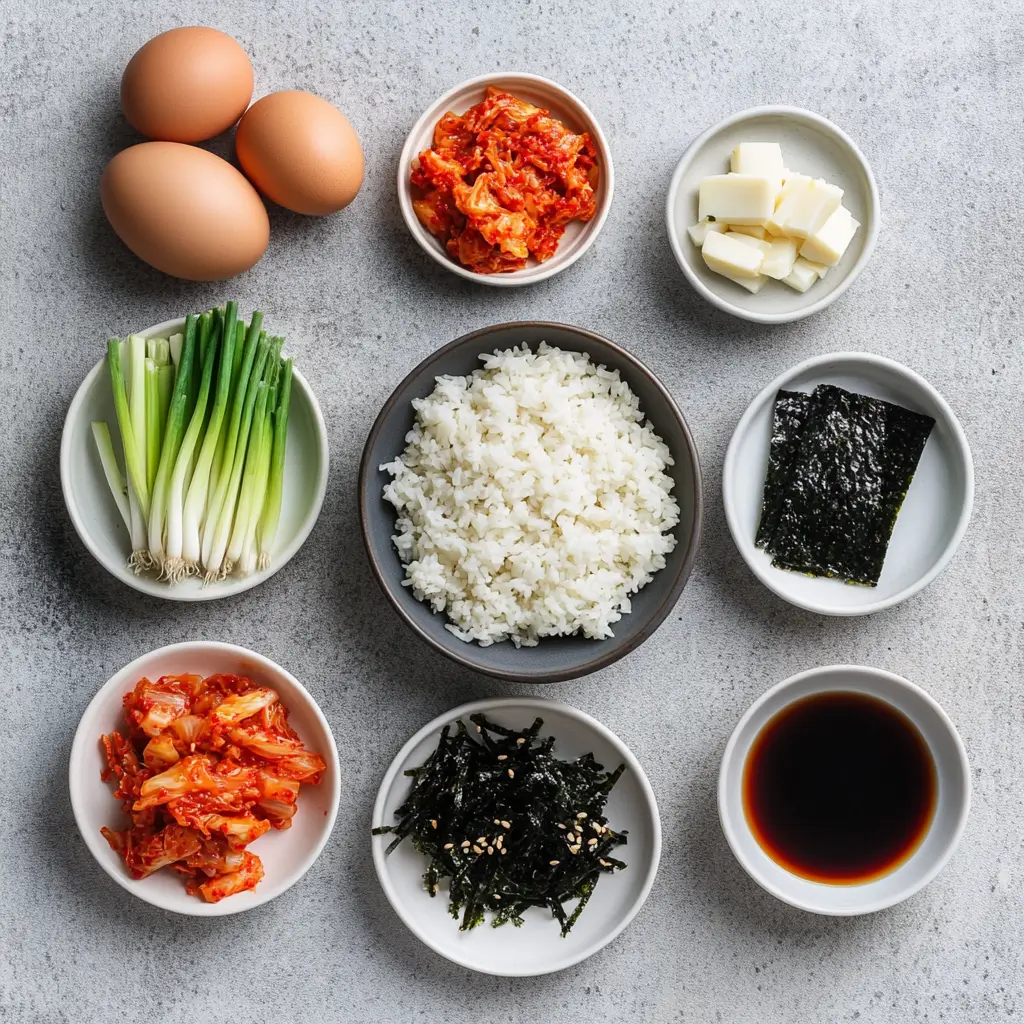
- Kimchi — use kimchi that’s had a little time to ferment further; it’s more sour and flavorful than very fresh kimchi, which works better here.
- Gochujang — Korean fermented chili paste, adds both heat and a deep savory sweetness. Regular hot sauce isn’t a good substitute; the flavor is completely different.
- Rice — short or medium grain rice works best. Long grain rice like basmati can work but ends up a little drier overall.
Step-by-step instructions
1. Cook any protein first
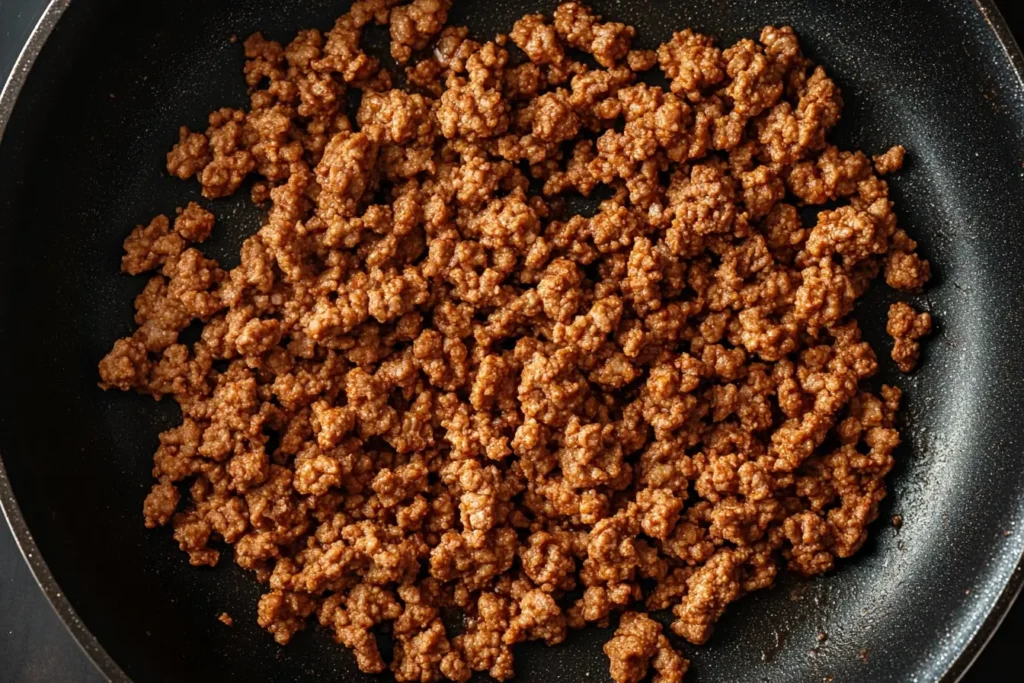
If you’re adding Spam, bacon, or tofu, brown it in the pan first and set it aside. It’ll go back in with the rice later.
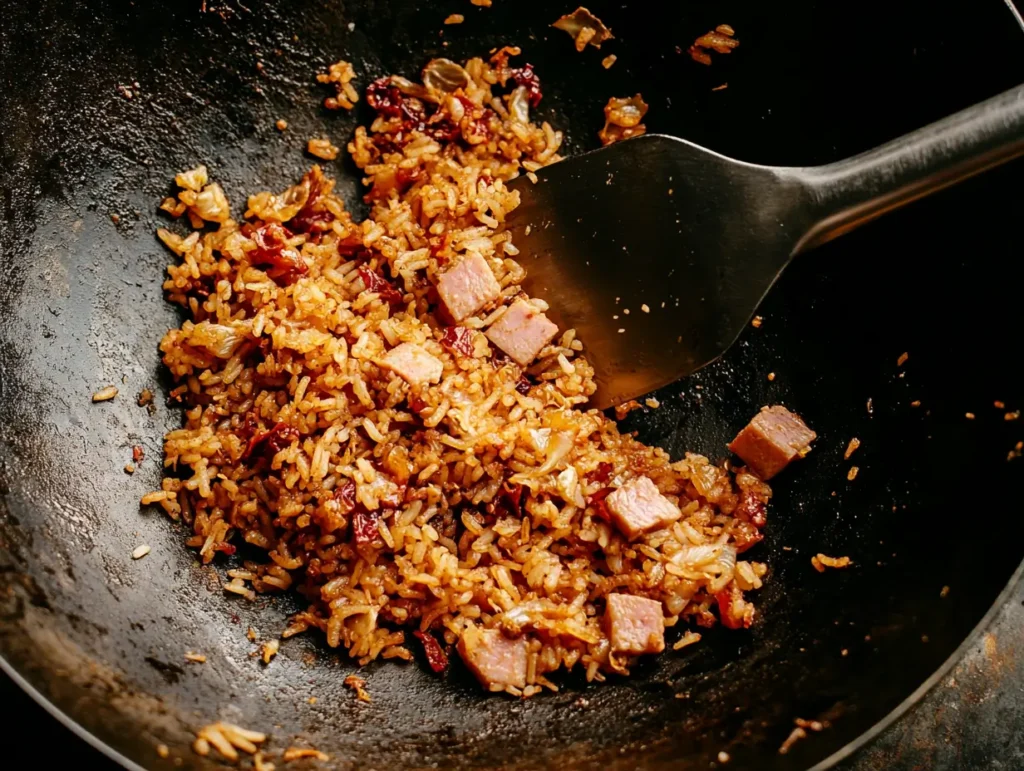
2. Fry the kimchi
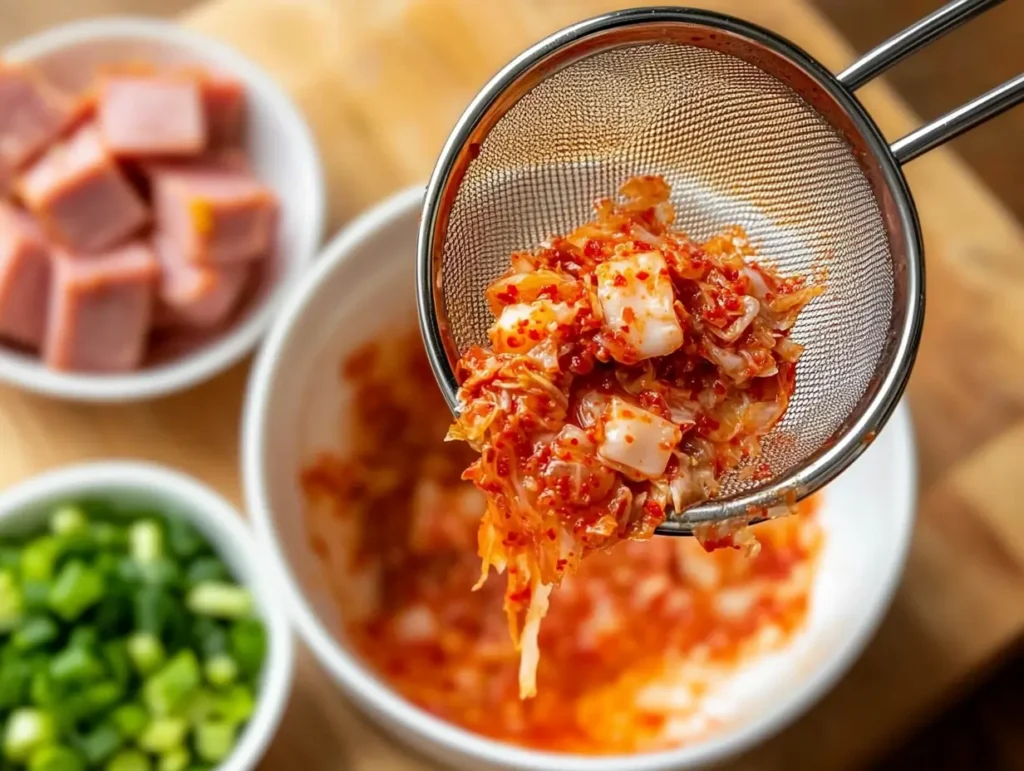
Add oil to the pan, then garlic and chopped kimchi. Cook 3-4 minutes until it starts to caramelize slightly at the edges — this step builds most of the flavor in the dish.
3. Add rice and sauce
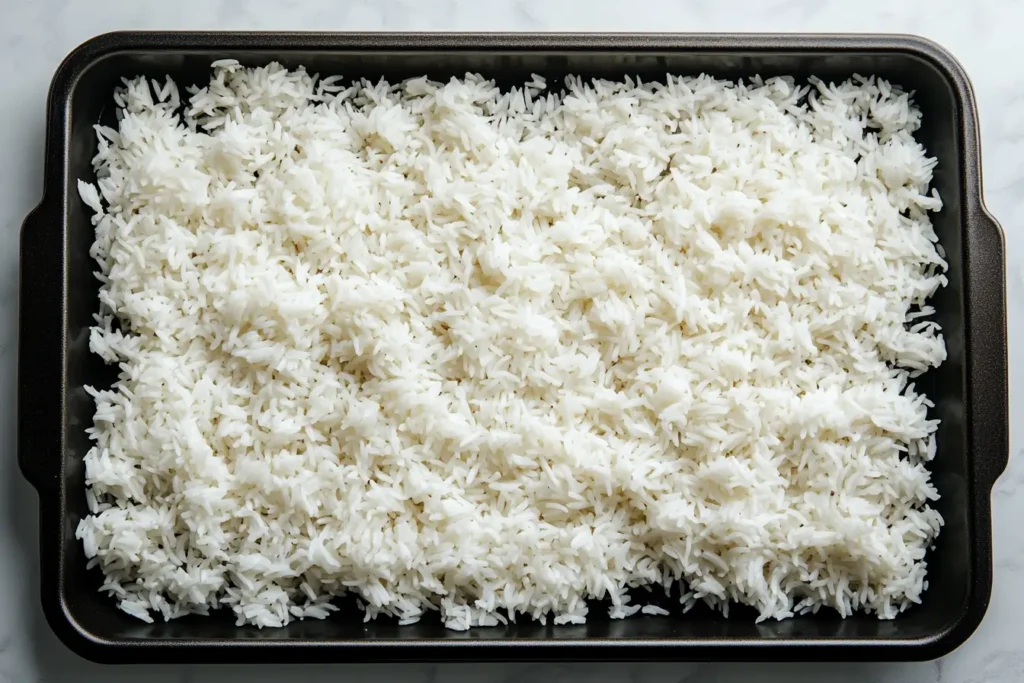
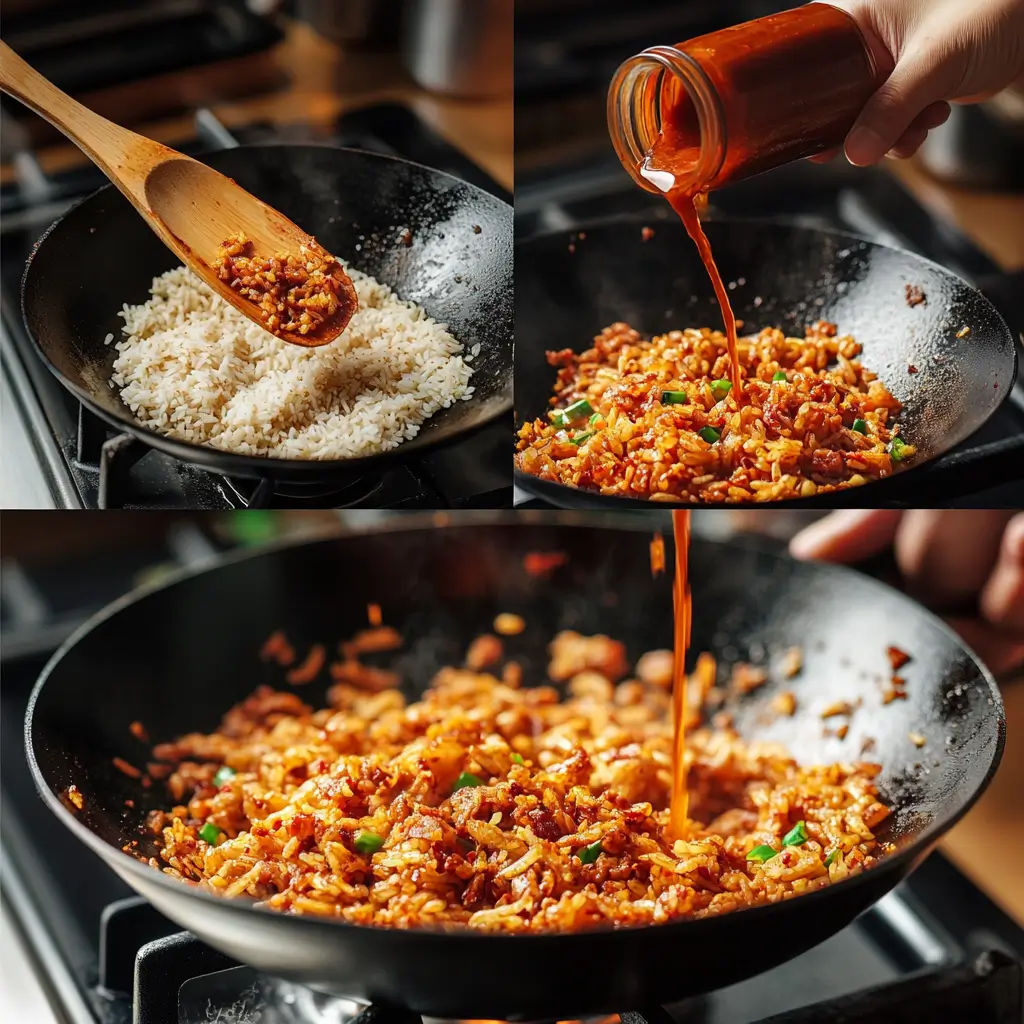
Add the day-old rice, breaking up clumps with your spatula. Stir in gochujang, soy sauce, and kimchi juice. Cook 5-6 minutes, stirring often, until heated through with some crisp spots.
4. Fry the eggs
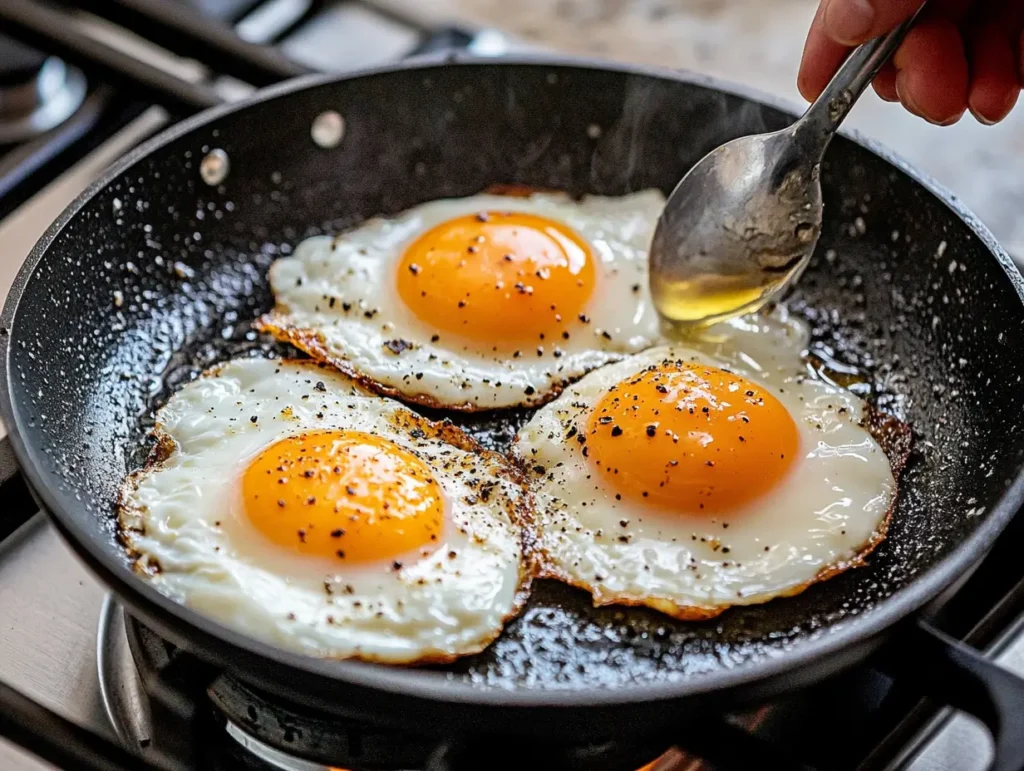
While the rice finishes, fry the eggs sunny-side up in a separate pan so the yolks stay runny.
5. Serve
Drizzle sesame oil over the rice and stir in scallions. Divide into bowls, top each with a fried egg, nori strips, and sesame seeds.
Common mistakes to avoid
Using freshly cooked rice is the number one issue — it turns the dish gluey instead of giving you separate, slightly crisp grains. Rushing the kimchi-frying step also matters; give it the full 3-4 minutes to caramelize, since that’s where a lot of the depth in this dish comes from.
Storage and reheating
Store leftover fried rice (without the egg) in an airtight container for up to 4 days. Reheat in a hot pan with a splash of oil to bring back some of the crispness — microwaving works but leaves it softer. Fry a fresh egg for each reheated portion rather than storing cooked eggs.
Variations worth trying
Add diced Spam for the most traditional version, or ground pork if you want more heft. For a vegetarian take, skip the meat and add cubed tofu, pan-fried separately until golden before stirring it into the rice at the end.
Frequently Asked Questions
Why does kimchi fried rice need day-old rice?
Freshly cooked rice holds too much moisture and turns mushy when fried. Rice that’s rested in the fridge overnight dries out slightly, so the grains stay separate and crisp up properly in the pan instead of clumping into a sticky mass.
Can I make kimchi fried rice without day-old rice?
Spread freshly cooked rice on a sheet pan and let it cool and dry out in the fridge, uncovered, for about 30 minutes. It won’t be quite as good as truly day-old rice, but it gets you most of the way there.
How spicy is kimchi fried rice?
It depends on your kimchi and how much gochujang you use. Start with a tablespoon of gochujang and taste before adding more, since both the kimchi and gochujang carry heat that compounds as it cooks.
What can I add to kimchi fried rice for more protein?
Diced Spam is the traditional addition and crisps up nicely alongside the kimchi. Bacon, ground pork, or cubed tofu all work as substitutes depending on what you have on hand.