Sausage Peppers And Onions
by Jessica | March 12, 2026 4:07 pm
One pan, thirty-five minutes, the whole house smelling incredible. The kind of dinner that earns its place in the permanent rotation.
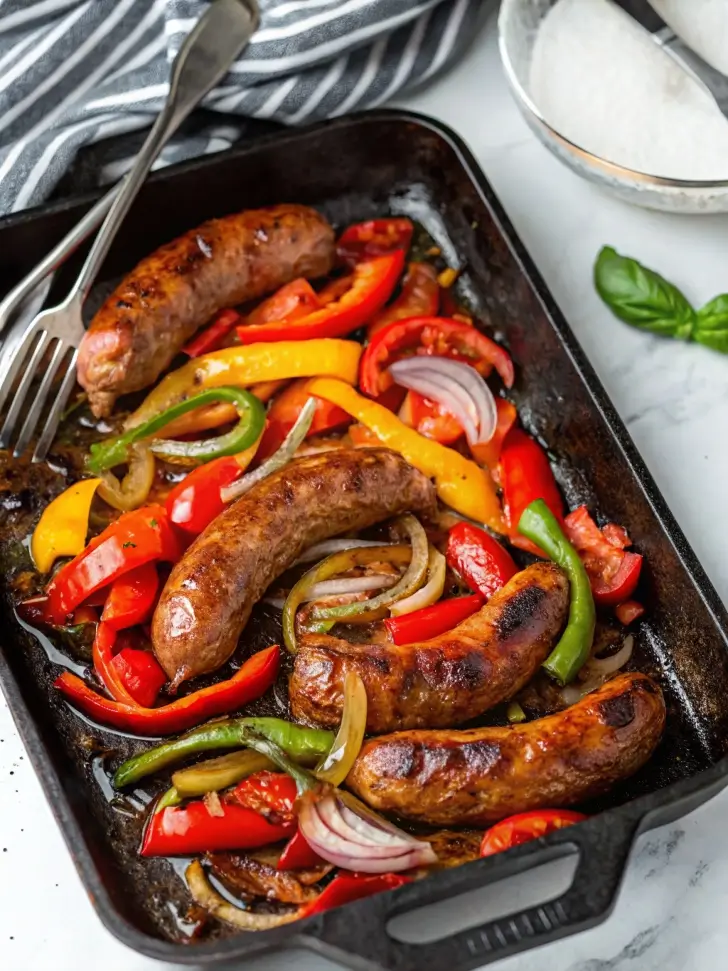
There is a very specific smell that means dinner is going to be good. It’s the smell of onions going soft and sweet in a hot pan, edging toward golden, starting to caramelize at the edges. Sausage[1] sizzling alongside. Peppers collapsing into ribbons of color. That smell hits and suddenly whatever kind of day it was doesn’t feel quite so heavy.
Sausage, peppers, and onions is one of those recipes that exists in that rare category of things that are genuinely simple and genuinely delicious at the same time. No tricks. No complicated technique. Just a hot pan and a little patience and something that tastes like it came from a street cart at an outdoor festival — the good kind, where the line is long for a reason.
My neighbor growing up made this every Friday. I could smell it from two doors down, no exaggeration, and I’d find some excuse to end up on her front porch around dinnertime. She never measured anything. She’d just start slicing onions and peppers while the sausage browned, and by the time the kitchen smelled like that, dinner was basically done. I didn’t actually learn the recipe — I just absorbed the smell and the general approach and figured out the rest myself later.
My first solo attempt involved a pan that was not nearly big enough. I tried to fit everything in at once — all the sausage, all the peppers, all the onions — and instead of getting that gorgeous browning I was expecting, everything just steamed. Pale, soft, kind of sad. Steaming is what vegetables do when there’s too much of them in a pan and no room for moisture to escape. It took me two more batches to figure out that a wide pan and not crowding it makes all the difference.
And then there was the time I walked away to check my phone and came back to sausage that was, let’s say, very well done on one side. Charred, really. I scraped the darkest bits off and called it caramelized. Honestly it was fine. But the ideal is golden-brown, not “recovered from a situation.”
I mean, it’s a forgiving recipe. But it rewards a little attention.
This is the dish that’s always better than you remembered, every single time. That’s not an accident. That’s just what good ingredients and a hot pan do together.
Contents
Why This Works
At first glance this looks like a throw-it-all-in-a-pan situation. And it kind of is — but the order things go in, and the heat, and a couple of small choices make the difference between dinner that’s just fine and dinner that people ask about.
What You’ll Need
| Ingredient | Amount | Notes |
|---|---|---|
| Italian sausage links | About 1½ lbs (5–6 links) | Sweet, hot, or a mix — your call. Bulk sausage works too. Whatever your store has or whatever’s on sale. |
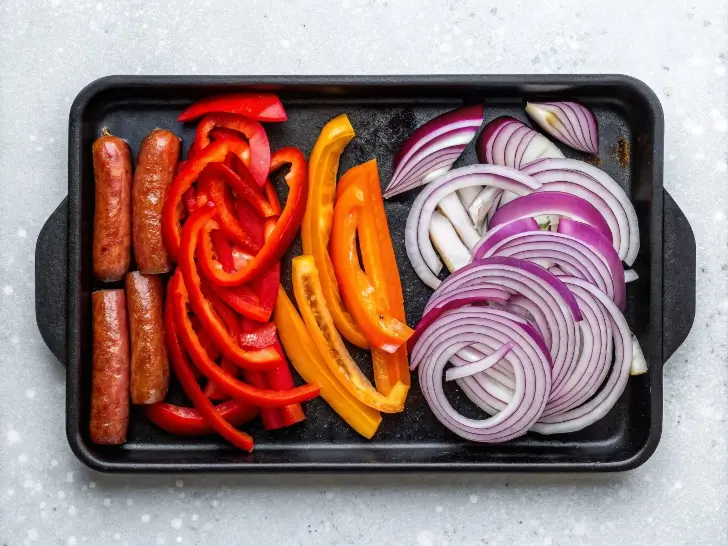
| Bell peppers, mixed colors | 3 large | At least two different colors for flavor variety and because it looks great. Red and yellow are sweeter; green is a bit sharper. Sliced into strips about half an inch wide. |
| Yellow onions | 2 medium | Sliced into half-moons, not diced. You want visible ribbons of onion in the final dish, not bits that disappear. Sweet onions work great too. |
| Garlic | 4 cloves, sliced or smashed | Sliced thin so it softens into the oil rather than burning. Or just a generous shake of garlic powder if you’re moving fast. |
| Olive oil | A couple tablespoons | Just enough to get things started. The sausage will render its own fat pretty quickly and take over from there. |
| White wine or chicken broth | A good splash — maybe ¼ cup | For deglazing at the end. White wine is better. Chicken broth is fine. Plain water in a pinch. Don’t skip the deglazing step. |
| Dried oregano | About a teaspoon | Italian seasoning works too if that’s what you have. A pinch of red pepper flakes if you want some heat alongside the sausage. |
| Salt & black pepper | To taste | The sausage brings a lot of salt already. Season at the end after tasting rather than at the beginning. |
| Fresh basil or parsley | A small handful | Optional but really nice scattered over the top just before serving. Adds freshness against all the rich, savory everything else. |
How to Make It
Tips & Storage
- Serve this tucked into a hoagie roll with a little mustard and that’s the whole meal — a proper sausage and pepper sandwich that is absolutely worth the mess of eating it.
- Over pasta, it’s a completely different and equally great dinner. Toss everything with rigatoni and a ladle of pasta water and you’ve got something that feels like a full production with very little extra effort.
- Over polenta or creamy mashed potatoes if you want something a little more substantial and a little more Sunday-dinner-feeling.
- Chicken sausage works if you’re watching fat content. The flavor is lighter but the technique is identical and it’s still really good.
- Add a pinch of fennel seeds to the oil before the onions go in if you want to really amplify that Italian sausage flavor. It sounds like a small thing and it is — but it’s a good small thing.
- This is one of those dishes that genuinely tastes better the next day. The flavors have time to settle and the sausage soaks up even more of the pepper and onion situation overnight.
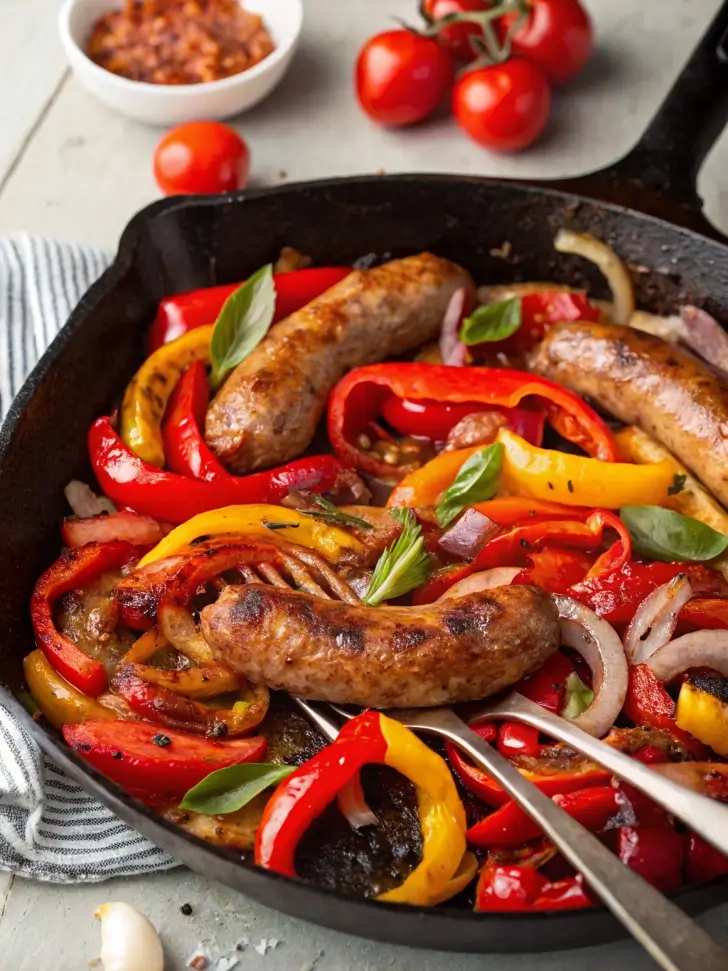
- A handful of cherry tomatoes thrown in with the peppers at step four adds sweetness and a little acidity that cuts through the richness nicely if you happen to have them.
Nutrition Info
Per serving based on 4 servings, using sweet Italian pork sausage links. These are estimates — your numbers will shift depending on the specific sausage you use (there’s a wide range out there), how much oil you cook with, and whether you’re serving this as-is or tucked into a roll with all the extras.
| Nutrient | Per Serving | Notes |
|---|---|---|
| Calories | ~420 kcal | Solid, satisfying dinner numbers. More if you’re adding a roll or pasta. |
| Total Fat | ~28g | Primarily from the pork sausage. Use chicken sausage to bring this down considerably. |
| Saturated Fat | ~9g | Pork fat doing its flavorful thing. |
| Carbohydrates | ~14g | Mostly from the peppers and onions — real, whole-food carbs. |
| Fiber | ~3g | Peppers and onions are pulling their nutritional weight quietly in the background. |
| Sugar | ~7g | Naturally occurring from the sweet peppers and caramelized onions. Nothing added. |
| Protein | ~22g | The sausage carries most of this. A good dinner protein number. |
| Sodium | ~820mg | Italian sausage is well-seasoned already. Taste before adding any extra salt at the end. |
- Sausage: https://ladysuniverse.com/?s=Sausage
- onions: https://rnyrecipes.com/fried-potatoes-and-onions/
Source URL: https://ladysuniverse.com/sausage-peppers-and-onions/