by Jamie from ladysuniverse Kitchen
The oven version of scalloped potatoes is one of those dishes that makes you feel like you’re doing something important. You make a roux. You layer things carefully. You check on it every twenty minutes like it might escape.
Then you forget about it for twelve minutes too long because someone called, and the top is burnt, and you’re standing there scraping the dark parts off and calling it “caramelized” with the confidence of someone who has done this more than once.
That was me, basically every time, for years.
My neighbor makes these in a crockpot and I always assumed it was a corner-cutting thing — like, fine, but probably not as good. Then she brought them to a potluck and I ate two servings and then casually walked back for a third when I thought nobody was looking. Somebody was looking. I asked for the recipe on the way home.
Here’s the honest truth about the crockpot version: the potatoes get more time to sit in the cream and cheese sauce as it builds, which means the flavor goes deeper than the oven version where everything kind of happens fast. It’s not a consolation prize. It’s actually just better, in a specific way, and I say that as someone who spent years being unnecessarily loyal to the oven method.
Why it works
The slow heat means the potatoes don’t dry out at the edges while the center catches up. Everything cooks at the same pace, which is the thing ovens are bad at with dishes like this.
The cheese melts gradually into the cream and the potato starch that releases during cooking, and by the time it’s done it’s this thick, clingy sauce that isn’t soupy and isn’t gluey. It’s just right.
Layering the potatoes with the sauce in between gives you even coverage. Dump everything in and stir it and you get potatoes swimming in cream on one end and dry on the other.
The lid traps steam, which is what keeps this from needing as much liquid as the oven version. You don’t add much cream at all compared to what you’d expect, because nothing is evaporating.
Russet potatoes work best here because they’re starchy and that starch does actual work in the sauce. Waxy potatoes like Yukon Golds stay firmer and the sauce doesn’t thicken the same way. I’ve done it with Yukons, it’s fine, but the texture is different and I missed the starchy sauce.
Ingredients
| Ingredient | Amount | Notes |
|---|---|---|
| Russet potatoes | About 3 lbs | Peeled and sliced thin — ⅛ inch or so |
| Heavy cream | 1 cup | Half-and-half works but the sauce will be thinner |
| Chicken broth | ½ cup | Vegetable broth is fine too |
| Garlic | 3 cloves, minced | Or a good shake of garlic powder in a pinch |
| Butter | 2 tablespoons | For greasing the crockpot and a little flavor |
| Sharp cheddar | 1½ cups, shredded | Shred it yourself — pre-shredded has coatings that mess with melting |
| Salt and pepper | Generously | Potatoes need more salt than you think |
| Fresh thyme | A few sprigs | Optional but worth it if you have it |
| Flour | 1 tablespoon | Helps thicken the sauce — can skip but the sauce stays thin |
A note on the cheese: sharp cheddar is what I use every time. Gruyère is excellent if you want something nuttier. I made it once with a Mexican blend because that’s what was open in the fridge, and my family ate the whole thing and one person asked what I did differently and seemed genuinely impressed, so make of that what you will.
How to make it
Butter the inside of your crockpot generously, sides and bottom. Potatoes stick badly if you skip this and you’ll be scraping the bottom to serve it and losing the good bits. I’ve done it both ways.
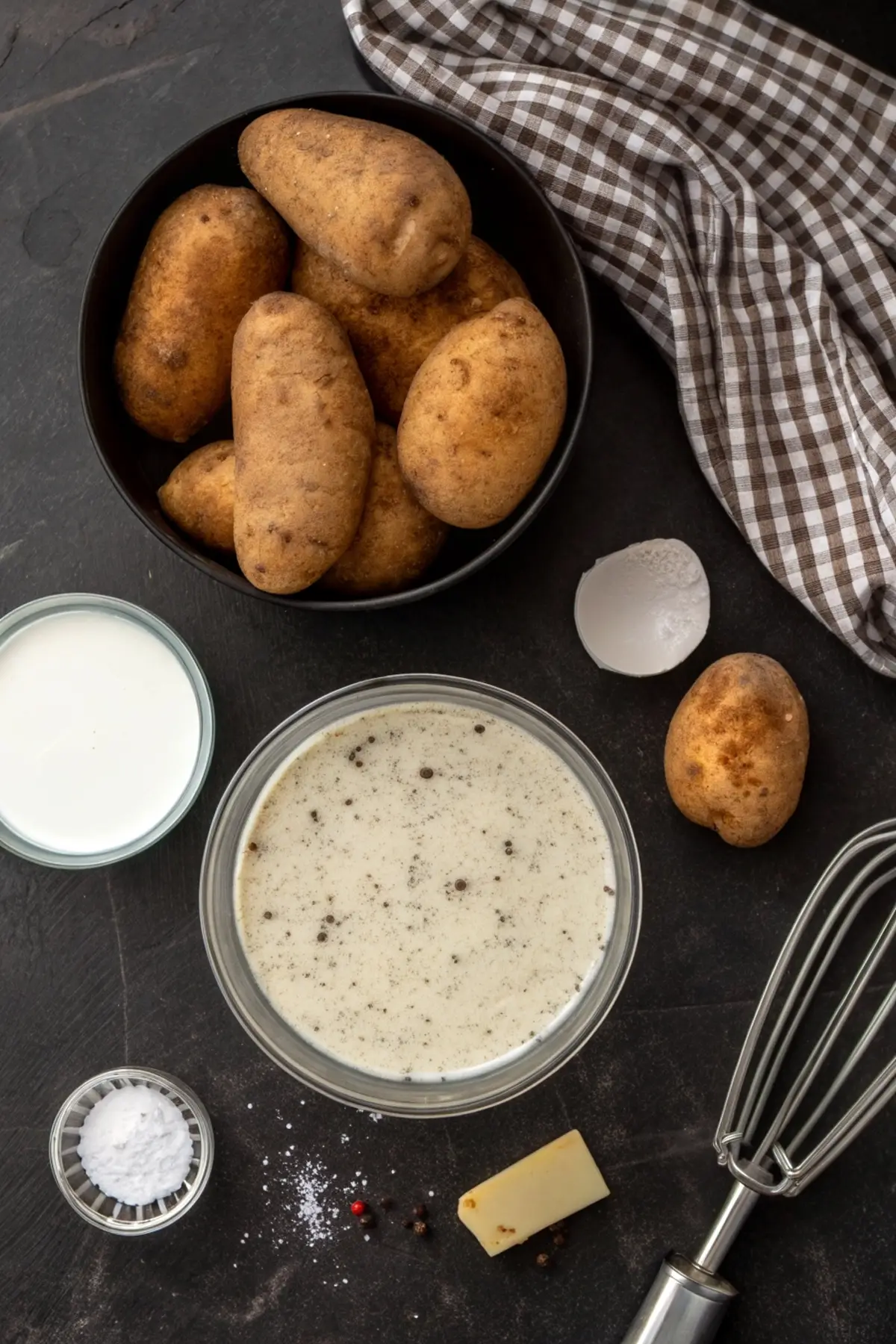
Slice the potatoes about ⅛ inch thick. A mandoline makes this fast. A sharp knife makes it slower and slightly uneven, which is fine. The uneven ones just cook a little softer. What you don’t want is thick chunks — anything over ¼ inch and the edges will be done before the center gets there.
(Kitchen chatter: I sliced my first batch too thick because I was eyeballing it and in a hurry. The outside was soft but the inside still had resistance, like a potato that hadn’t committed. Cut them thin.)
Whisk together the cream, broth, garlic, flour, salt, and pepper in a bowl or a large measuring cup. This is your sauce — it’s pretty thin at this point but it thickens as it cooks.
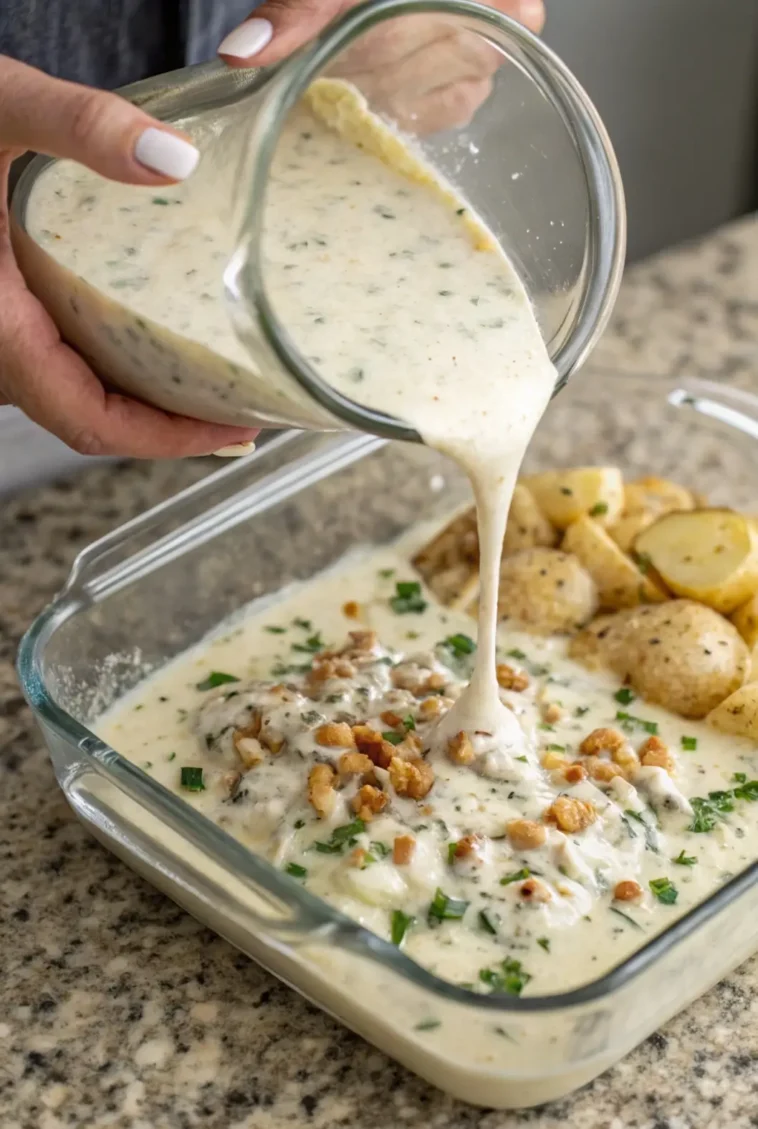
Layer the potatoes in the crockpot. A third of the potatoes, a handful of cheese, a pour of the cream mixture, repeat. End with cheese on top. The layering is a little fussy but it’s the thing that makes sure every potato gets coated.
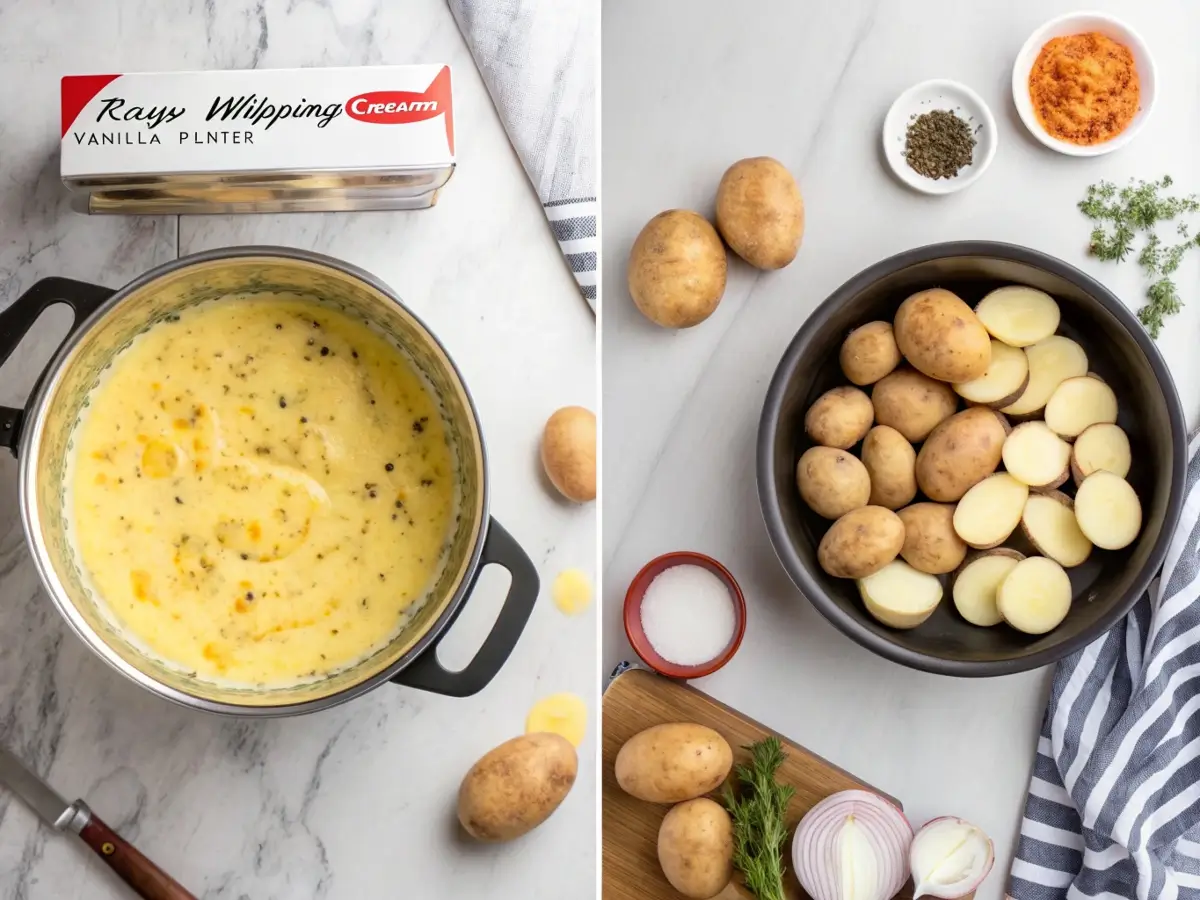
Put the lid on and cook on low for 6 to 7 hours, or high for 3 to 4 hours. Low is better — the potatoes get more time to absorb the sauce and the texture is more even throughout. High works when you’re short on time but check it at 3 hours because crockpots run differently and yours might cook faster than mine.
(Kitchen chatter: My old crockpot ran hot and I didn’t know this for a long time. Every slow cooker recipe I made was done 45 minutes early and slightly overdone. If you’ve never calibrated yours against a recipe, just check it early the first time.)
Check for doneness by piercing the center of the potato stack with a fork. It should go in with no resistance at all. If there’s any firmness, give it another 30 minutes.
Let it sit with the lid off for about 10 minutes before serving. The sauce tightens up and it plates much better than if you serve it the second you open the lid.
Tips & storage
- Slice potatoes as uniformly as you can — thickness differences mean uneven cooking and you’ll get some soft and some slightly underdone in the same bite
- Don’t lift the lid to check on it repeatedly while it’s cooking — each peek adds about 20 minutes to the cook time and the steam is doing actual work in there
- If the sauce looks thin when you open it, it will thicken as it rests. Give it the 10 minutes before you worry about it.
- Add ham or cooked bacon between the layers if you want to make it more of a meal — works really well and you don’t need to change anything else
- Fresh thyme is worth adding if you have it. Dried works too, just use less.
On leftovers: These keep in the fridge for about 4 days and reheat better than you’d expect — add a tiny splash of cream before microwaving and they come back pretty close to fresh. I write the date on the container now, after a period of my life where I was just opening random containers and making judgment calls on smell alone. Very good system. Would not recommend.
Nutrition (approximate, per serving)
Based on 6 servings as a side dish.
| Per serving | |
|---|---|
| Calories | ~310 |
| Total fat | 18g |
| Saturated fat | 11g |
| Cholesterol | 55mg |
| Sodium | ~380mg |
| Total carbs | 30g |
| Fiber | 2g |
| Sugars | 2g |
| Protein | 8g |
Shifts depending on cheese type and how generous you were with it, which in my house is very.