
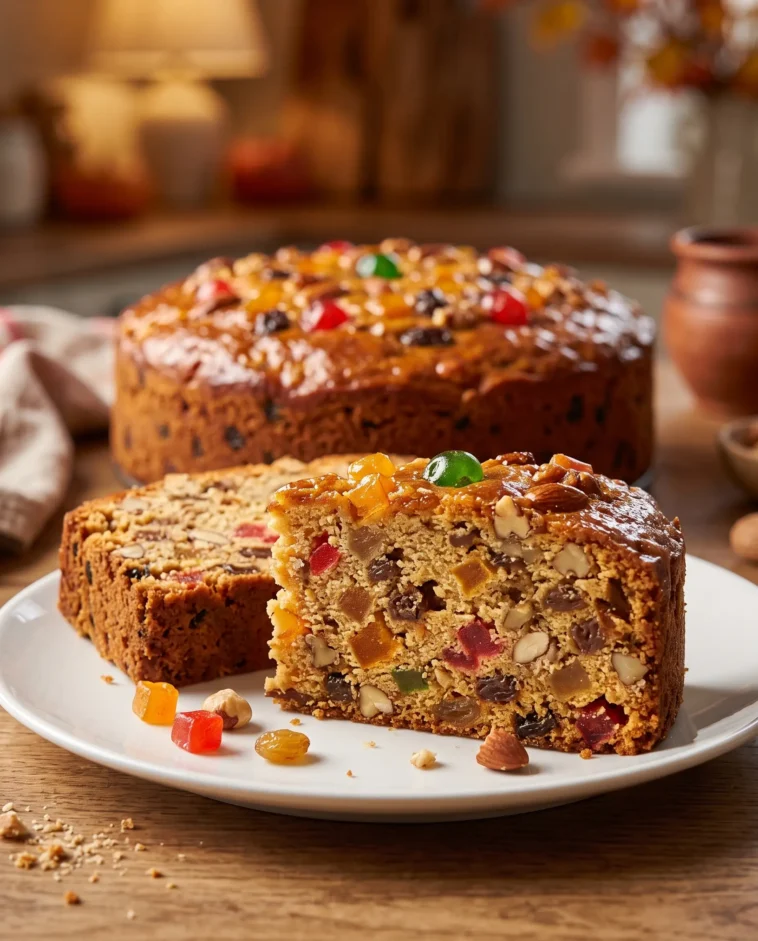
There’s a fruit cake in Tecumseh, Michigan that was baked in 1878, and nobody has dared to eat it. Fidelia Ford made it, then died before she could serve it. Five generations later her family still keeps it under glass on a shelf (TODAY, 2019). I think about that cake every winter. Not because I want a bite of it, but because it says something honest about this bake: fruit cake is almost impossible to wreck.
This is the version I make on repeat. You need two bowls and a spatula. First-time baker or fiftieth, the loaf comes out dense, moist, and warm with spice, and it gets better sitting on the counter for a couple of days. Here’s exactly how I make it, plus the small tricks that keep it from failing.
The short version
- One bowl for dry, one for wet, then stir. No creaming and no mixer, which is the whole reason it’s hard to get wrong.
- Bakes at 325°F for about 60 to 75 minutes in a 9×5 loaf. The fruit and molasses give you a wide window before it dries out.
- Keeps up to a month in the pantry, six months chilled, and a year frozen, per USDA storage guidance — so it’s made for baking ahead and gifting.
New to holiday loaves? Start with the ingredient notes below before you shop. If you’ve made a hundred of these, skip to the recipe card. For more make-ahead bakes, see our holiday baking guide.
Why this one actually earns the name
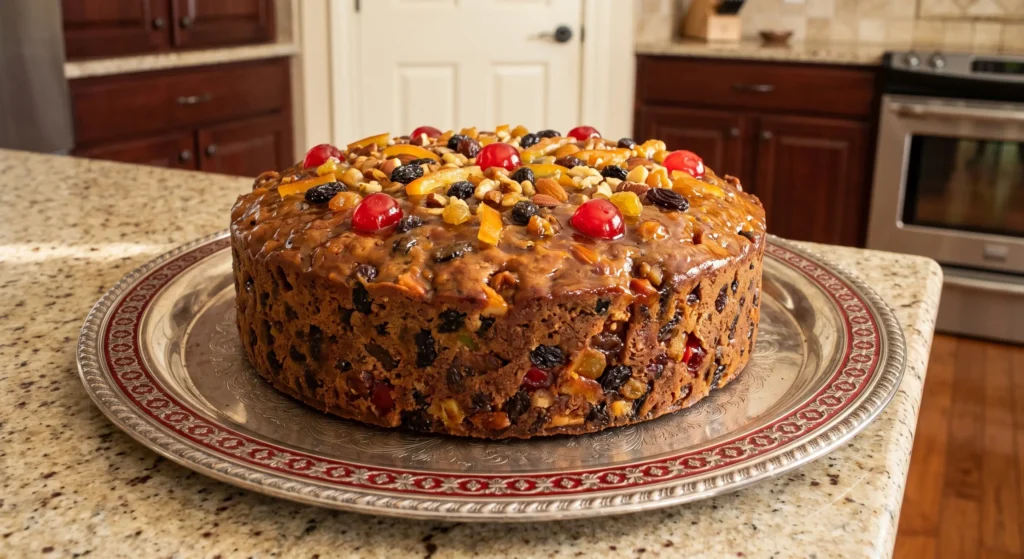
The name isn’t marketing. This cake skips every step where a butter cake usually goes wrong. You don’t cream butter and sugar to a certain fluffiness, you don’t fold in whipped whites, and you don’t worry about a delicate crumb collapsing. You melt the butter, whisk the wet into the dry, and stir until the streaks disappear.
That matters because the two most common cake failures — a dense sunken middle and a dry, cottony edge — both come from technique steps this recipe doesn’t have. There’s no creaming to under-do. And the batter is so packed with fruit and molasses that it stays moist even if you leave it in five minutes too long.
The one failure people do hit is fruit sinking to the bottom. That’s not the recipe’s fault, and it’s a two-second fix — toss the fruit and nuts in a spoonful of the flour before they go in. More on that in the tips.
Ingredient notes: what each one is doing
Every ingredient here has a job, and knowing the job tells you where you can swap and where you shouldn’t. The fruit and molasses carry the moisture and the flavor. The orange keeps it from tasting heavy. Everything else is structure.
- 3 cups mixed dried fruit — raisins, golden raisins, chopped dried apricots, dried cranberries, and a handful of candied cherries or peel if you like them. Buy the plump, glossy kind. Soaking fixes a lot (see tips).
- 1 cup chopped pecans — for crunch against all that chew. Walnuts work. Toast them first for more flavor.
- ¼ cup molasses — the color and the deep, almost-caramel warmth. Use regular unsulphured molasses. Blackstrap is far more bitter, so only reach for it if that’s a flavor you already love.
- ¾ cup orange juice + 1 tbsp zest — the brightness that cuts the richness. Fresh-squeezed is noticeably better, and the zest is where most of that orange smell lives.
- ½ cup butter, melted — melted, not softened, because there’s no creaming step. Unsalted so you control the salt.
- 1 cup sugar — I use packed light brown sugar for a moister, more molasses-forward loaf. White sugar gives a cleaner, lighter result. Both are correct.
- 2 cups all-purpose flour — spooned and leveled, never scooped.
- Spices — 1½ tsp cinnamon, ½ tsp nutmeg, and ¼ tsp cloves if you want it more Christmassy.
- 3 large eggs, room temperature, plus 1½ tsp baking powder, ½ tsp baking soda, and ½ tsp salt.
- Optional: 2 to 3 tbsp brandy, rum, or orange liqueur — some in the batter, some brushed on after. Skip it and the cake is still excellent.
What you’ll need
Nothing special, which is part of the point. If you own a loaf pan and two bowls you’re ready. An instant-read thermometer is the one optional tool that takes the guesswork out of doneness.
- 9×5-inch loaf pan — the workhorse size. Bundt or mini loaves also work; times are in the tips.
- Parchment paper — a sling makes the cooled loaf lift out in one clean move.
- Two mixing bowls, a whisk, a spatula.
- Wire rack — so the bottom doesn’t steam and go gummy.
- Instant-read thermometer (optional) — the center reads about 205 to 210°F when done.
How to make never fail fruit cake
The whole thing is coat the fruit, mix dry, mix wet, combine, bake. Start to oven takes about 20 minutes. If you have time, soak the fruit first — it’s the single biggest upgrade for a juicier loaf.
- Prep (and soak, if you can). Heat the oven to 325°F. Line the loaf pan with a parchment sling. For the best texture, cover the dried fruit with the orange juice (plus a splash of brandy) and let it sit 30 minutes, or overnight in the fridge.
- Flour the fruit. Toss the dried fruit and pecans with 2 tablespoons of the flour until lightly coated. This keeps them suspended instead of sinking.
- Whisk the dry. In a large bowl, whisk the remaining flour, sugar, baking powder, baking soda, salt, and spices.
- Whisk the wet. In a second bowl, whisk the eggs, orange juice (including any soaking liquid), melted butter, molasses, zest, and vanilla until smooth.
- Combine, don’t beat. Pour the wet into the dry and stir just until no dry flour remains. Overmixing makes it tough. Fold in the floured fruit and nuts.
- Bake. Scrape into the pan and smooth the top. Bake 60 to 75 minutes. Tent loosely with foil around the 45-minute mark if it’s browning fast. It’s done when a skewer in the center comes out with a few moist crumbs, not wet batter (about 205°F inside).
- Cool, then wait. Cool in the pan 15 minutes, lift out by the parchment, and cool fully on a rack. Brush the warm top with a tablespoon of brandy if you like. It’s genuinely better on day two and three.
How long to bake by pan (325°F)
Expert tips for the best loaf
A handful of small moves separate a good fruit cake from one people ask you to make again. Two of them — flouring and soaking the fruit — matter more than anything else in the recipe.
- Soak the fruit. Even 30 minutes in orange juice plumps it and pushes moisture into the crumb. Overnight is better.
- Flour the fruit and nuts. The two-tablespoon toss is the difference between an even loaf and a plain top over a fruit-packed bottom.
- Spoon and level your flour. Scooping the cup straight into the bag packs in an extra ounce or two and dries the cake out.
- Stop mixing early. Once the flour disappears, you’re done.
- Use a thermometer if you have one. 205 to 210°F in the center beats staring through the oven door.
- Let it rest. Wrap the cooled loaf and give it a day or two. The flavor deepens and it slices cleaner.
Variations that hold up
This recipe takes swaps well because the structure doesn’t depend on any one fruit or nut. Change what’s in the mix, keep the wet-to-dry ratio steady, and it behaves.
- Alcohol-free. Leave out the brandy and brush with extra orange juice.
- Nut-free. Drop the pecans and add another ½ cup of dried fruit.
- Boozy heirloom style. Brush the wrapped loaf with a teaspoon of brandy every few days for a couple of weeks.
- Little gift loaves. Divide into mini pans, bake about 40 minutes, wrap in parchment and twine.
- Darker and spicier. Swap to all brown sugar, add the cloves, and stir in a pinch of allspice.
How to store fruit cake (and why it lasts)
Wrapped well, this loaf keeps up to a month in the pantry, six months in the fridge, and a year in the freezer, according to USDA guidance reported by TODAY (2019). That long shelf life is the whole reason fruit cake became a make-ahead holiday tradition in the first place.
How long fruit cake keeps, wrapped well
Why does it last so long? The sugar in the batter binds up nearly all the water, and bacteria need available water to grow. As food-safety specialist Ben Chapman of North Carolina State put it, there just isn’t enough free water in a fruit cake for spoilage organisms to get going (TODAY, 2019). That’s the same reason the Ford family’s 1878 loaf is technically still safe, if not exactly pleasant.
To freeze: wrap the fully cooled loaf tightly in plastic, then foil, and freeze up to a year. Thaw overnight on the counter, still wrapped, so the surface doesn’t get damp.
Serving and reheating
This cake is best at room temperature, where the fruit is soft and the crumb isn’t stiff from the fridge. A cold slice warms up in about 10 seconds in the microwave, or a few minutes in a low oven.
I like it plain with strong tea or coffee. For something more festive, a smear of cream cheese or a knob of brandy butter turns a slice into dessert. It also makes a good edible gift — wrap a whole loaf, and it’ll keep on your friend’s counter for weeks.
Common mistakes
- Scooping the flour. The number-one cause of a dry loaf. Spoon it into the cup and level with a knife.
- Skipping the parchment. A fruit-heavy, sugary loaf loves to stick.
- Opening the oven early. The rush of cold air can sink the middle. Wait until at least the 45-minute mark.
- Reaching for blackstrap molasses. It’s much more bitter than regular molasses and can take over the whole cake.
- Cutting it hot. Slice a warm fruit cake and it crumbles. Let it cool fully, ideally rest a day.
Frequently asked questions
Why did all my fruit sink to the bottom?
The fruit wasn’t coated in flour before it went into the batter. Tossing the dried fruit and nuts in 2 tablespoons of the recipe’s flour gives them a grip on the batter so they stay suspended. It takes ten seconds and fixes the problem completely.
Do I have to use alcohol?
No. The brandy or rum is optional and adds a little warmth plus extra keeping power. Leave it out and brush the loaf with orange juice instead. The cake is fully flavored from the fruit, molasses, and citrus on its own.
How far ahead can I make it?
Weeks ahead, easily. Wrapped well, fruit cake keeps up to a month in the pantry and six months refrigerated, per USDA guidance (via TODAY, 2019). The flavor actually improves after a day or two, which is why it’s such a classic make-ahead holiday bake.
Can I bake it in a bundt pan or mini loaves?
Yes. For a bundt or tube pan, start checking at about 80 minutes. For mini loaves, check around 40 minutes. In every pan, bake to a clean-ish skewer (about 205°F in the center) rather than trusting the exact time.
Why is it called a “never fail” fruit cake?
Because it skips the steps where cakes usually go wrong. There’s no creaming and no whipped egg whites, just a stir-together batter. The dense, fruit-heavy structure also has a wide window of doneness, so a few extra minutes won’t ruin it the way it would a sponge.
That’s the loaf that’s earned a permanent place in my December. It’s forgiving enough for a nervous first-timer and good enough that experienced bakers keep the recipe. Bake it once, let it sit a day, and see why the name sticks. Made it? Leave a star rating and a comment below — I read every one.